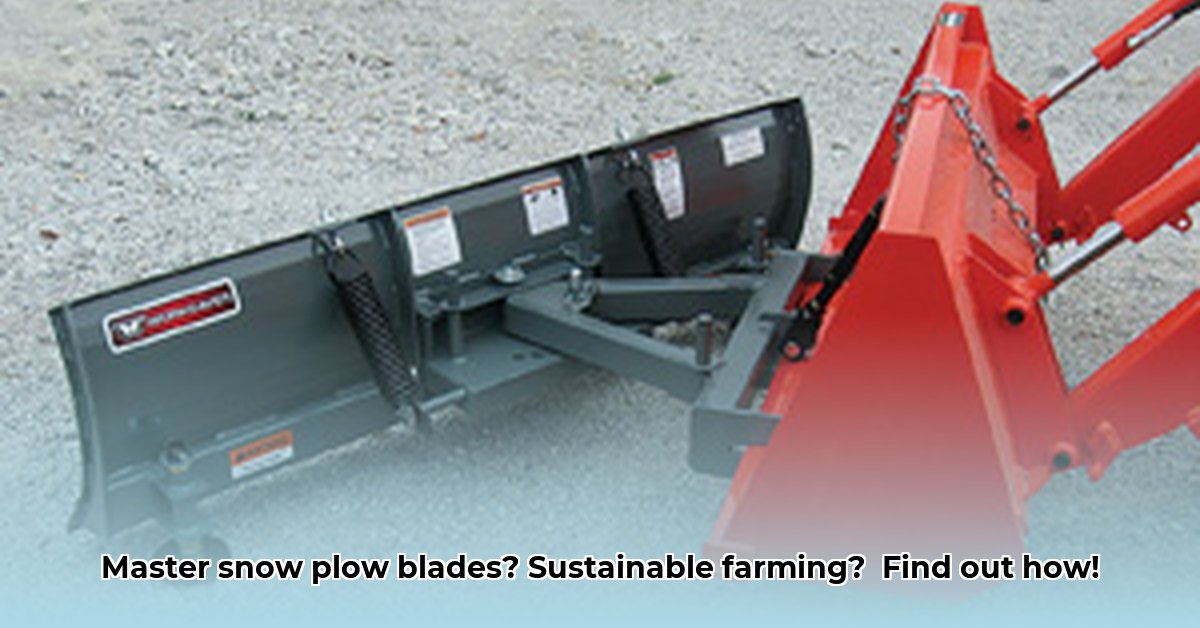
Winter's arrival brings challenges to farming, but efficient snow removal can keep your operations running smoothly. This guide helps you select the right snow plow blade for your tractor, optimizing efficiency and minimizing environmental impact. We'll cover blade types, selection criteria, sustainable practices, safety guidelines, and maintenance tips to ensure your farm stays productive throughout the winter months. For more on John Deere tractors, check out this helpful resource: John Deere plows.
Choosing the Right Snow Plow Blade
Before selecting a snow plow blade, assess your farm's specific needs. Consider farm size, typical snowfall, tractor horsepower, and budget. These factors directly influence the type of blade best suited for your operations. Do you often face heavy, wet snow or are you primarily concerned with light dustings? This impacts the type of blade you need.
Types of Tractor Snow Plow Blades
Several blade types cater to different needs and conditions. Each offers unique advantages and disadvantages regarding snow conditions, farm size, and efficiency.
| Blade Type | Pros | Cons | Best Suited For |
|---|---|---|---|
| Straight Blade | Simple, versatile, relatively inexpensive, easy maintenance | Less efficient in heavy, wet snow, less effective for large areas | Smaller farms, light snowfall, clearing driveways and smaller paths |
| V-Blade | Efficiently moves large snow volumes, effective snow piling | More costly, requires a more powerful tractor, can be trickier to handle | Larger farms, heavy or frequent snowfall, wide open areas |
| Pusher Blade | Ideal for shifting massive amounts of snow, good for hard-packed snow | Can damage paved surfaces if misused, offers less precise control | Clearing large, flat expanses of hard-packed snow, less ideal for detail |
Matching the Blade to Your Farm's Needs
Selecting the right blade involves careful consideration of several key factors.
Farm Size: Smaller farms with light snowfall often benefit from a straight blade. Larger operations dealing with heavy snow will likely need a V-blade or even a pusher blade. "For a small, 50-acre farm with average snowfall, a straight blade is often sufficient," says Dr. Emily Carter, Agricultural Engineer, University of Illinois.
Snowfall: The type and amount of snowfall significantly impact blade selection. Light, fluffy snow is easily handled by a straight blade, whereas heavy, wet snow demands the power and efficiency of a V-blade or pusher. "Heavy, wet snow requires a blade with the power to push, not just lift," explains John Miller, Farm Operations Manager at Miller Family Farms.
Tractor Horsepower: Never underestimate your tractor's capabilities. Check your tractor's manual for recommended blade sizes. Using a blade too large can damage both the tractor and the blade.
Budget: Straight blades are generally more affordable than V-blades or pusher blades. Factor in maintenance costs as well; some blades require more upkeep than others. Dr. Carter suggests comparing the total cost of ownership over several years, not just the initial purchase price.
Sustainable Snow Removal Practices
Sustainable farming extends beyond crop production to encompass responsible resource management. Efficient snow removal should minimize fuel consumption, soil compaction, and erosion.
Fuel Efficiency: Opt for fuel-efficient tractors and consider alternative fuels. Smaller, appropriately powered tractors can substantially reduce fuel consumption. "Choosing a tractor sized appropriately for the plow dramatically improves fuel efficiency," advises John Miller.
Minimize Soil Compaction: Avoid excessive passes over the same area. Strategic plowing minimizes soil damage.
Erosion Control: Proper snow placement prevents erosion. Avoid pushing snow into waterways or sensitive areas.
Lifecycle Costs: Consider the long-term costs of a blade, including maintenance, repairs, and replacement. A durable blade will minimize waste over time.
Safe Snow Removal Practices: Prioritizing Safety
Safety is paramount when operating a tractor with a snow plow. Always:
- Pre-Operation Inspection: Check your tractor and blade for damage before each use.
- Dress Appropriately: Wear warm, layered clothing, waterproof outerwear, sturdy boots, and gloves.
- Maintain Visibility: Ensure clear vision; avoid plowing during heavy snow or at night.
- Control Speed: Maintain a slow and controlled speed; adjust to changing conditions.
- Situational Awareness: Be aware of surroundings; watch for obstacles, power lines, etc.
- Emergency Plan: Have a plan for breakdowns or accidents.
Maintenance and Storage: Extending Blade Lifespan
Regular maintenance extends blade life.
- Post-Use Cleaning: Clean the blade after each use to prevent corrosion.
- Rust Prevention: Apply a suitable rust inhibitor.
- Proper Storage: Store indoors in a dry area to prevent weather damage.
Conclusion: Efficient and Sustainable Winter Operations
Efficient and sustainable snow removal is key to maintaining a productive farm throughout the winter. Choosing the right snow plow blade, combined with safe operating practices and proper maintenance, ensures smooth operations and protects your farm's resources for years to come. Remember, ongoing research continues to refine best practices; stay updated on the latest developments.